
How to Use Jerk Seasoning Properly: Marinade Times, Grill vs Oven and the Mistakes to Avoid

Every week somebody comes into the shop, picks up a jar of our Jerk Seasoning Dry Rub, turns it over and asks me the same question: "So how do I actually use this?" It's a fair question, and I love answering it, because the honest answer is that jerk is not really a spice mix at all. Jerk is a method — a way of seasoning, resting and cooking meat over fire that Jamaicans have been perfecting for more than three hundred years. The jar is your ticket in. What you do next is what makes it jerk.
So here it is: everything I tell people over the counter, written down properly. Marinade times, grill versus oven, when to add the sauce, and the mistakes I see good cooks make with great seasoning.
First, a word on what jerk actually is
Jerk was born in the mountains of Jamaica, developed by the Maroons — Africans who escaped enslavement and built free communities in the island's interior. They seasoned wild pork with what the land gave them, chief among it the berries and wood of the pimento tree (what the British call allspice), plus scotch bonnet, thyme and scallion, and cooked it slowly in covered pits so the smoke stayed low and the food stayed hidden. That combination — pimento, scotch bonnet, smoke, patience — is the soul of jerk. Today you'll find it done over pimento-wood coals in steel drum pans all over Jamaica, most famously at Boston Bay in Portland, which is where I learned.
Why does the history matter for your Tuesday chicken thighs? Because it tells you what you're aiming for: deep seasoning all the way through the meat, real smoke or honest char, and low-and-slow cooking. Get those three right and you're cooking jerk. Skip them and you've made spiced chicken — nice, but not the same thing.
Dry rub, wet marinade, or both
Our rub is a dry blend — pimento, thyme, scallion, garlic, ginger, cinnamon, nutmeg and scotch bonnet, ground in small batches. You can use it straight, patted generously onto oiled meat, and it will do beautiful work. But the classic move, and the one I'd steer you towards, is turning it into a wet marinade: for every two tablespoons of rub, add a tablespoon of oil, the juice of half a lime and, if you have them, a splash of soy sauce and a spoon of brown sugar. You'll get a dark, loose paste that clings to the meat and carries the seasoning deep.
Whichever route you take, be generous. Jerk is not a light dusting. Massage it in properly — under the skin of chicken if you can, into slashes cut in whole fish — because seasoning only flavours what it touches.
Marinade times: the honest numbers
Time is the ingredient most people skimp on. Here's what the kitchen at Belly Nice actually does:
- Fish and prawns — 30 minutes to 1 hour, no longer. The lime in a wet marinade starts to cure delicate flesh if you leave it, and fish takes seasoning quickly anyway.
- Chicken pieces — a minimum of 4 hours, but overnight is where the magic is. Bone-in thighs and legs marinated overnight taste seasoned to the bone, because they are.
- Pork shoulder and belly — overnight to 24 hours. Pork is dense and rewards patience more than anything else you'll jerk.
- Halloumi, tofu and vegetables — 30 minutes is plenty. They take flavour on the surface rather than absorbing it, so save yourself the wait.
Marinate in the fridge, always, in a covered bowl or a zip bag with the air pressed out. And a food-safety point worth repeating: once raw meat has sat in a marinade, that marinade is raw too. Don't brush it onto cooked food or serve it as a sauce unless you've boiled it hard for a few minutes first.
Grill versus oven
On the barbecue
Charcoal is your friend, and indirect heat is the whole game. Bank your coals to one side, put the chicken on the other, lid down, and let it cook gently in the smoke for 40 to 50 minutes, turning occasionally, before finishing it over the hot side for the char. If you throw jerk chicken straight over roaring coals you'll get the classic beginner result: blackened outside, raw inside, and a sugar-laced marinade turned bitter. If you can get pimento wood chips, soak a handful and scatter them on the coals — that's the true Boston Bay perfume. Whisky-barrel or oak chips are a respectable substitute.
In the oven
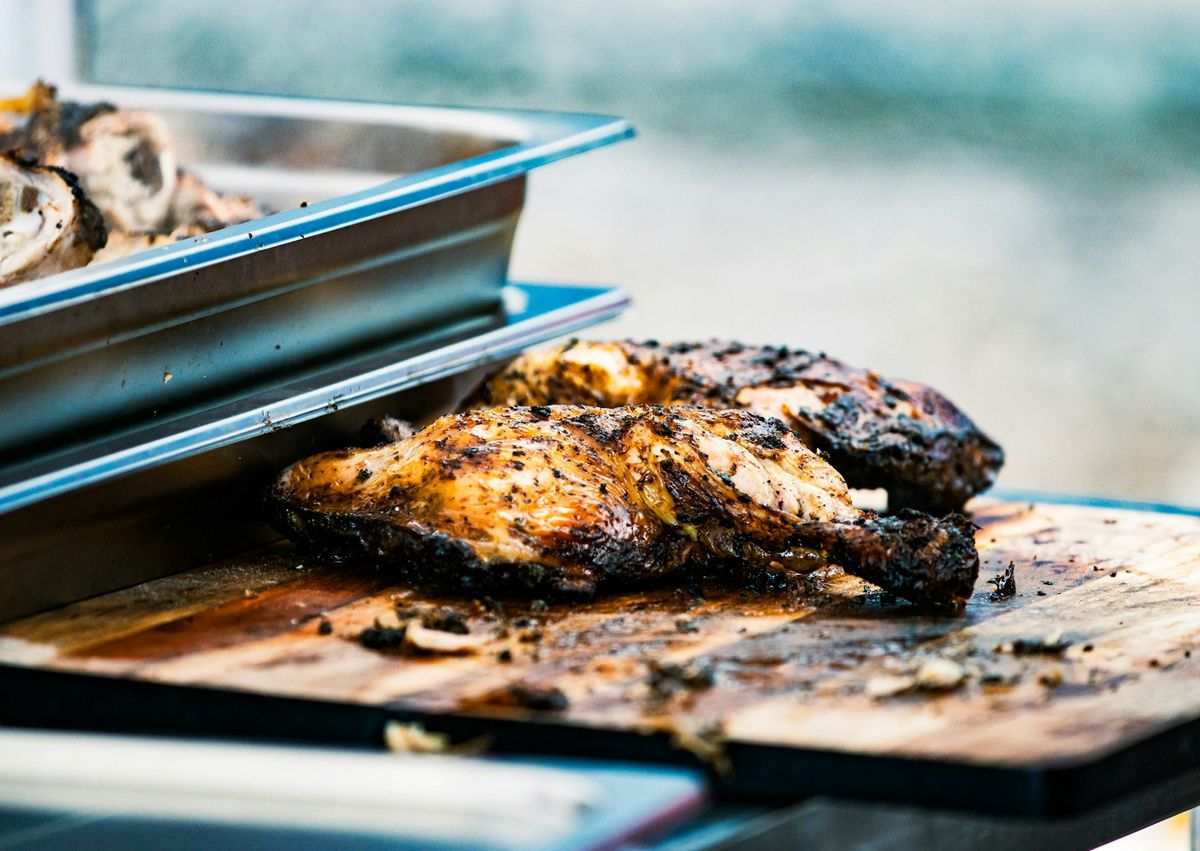
No shame in the oven — most of the jerk eaten in Britain between October and April comes out of one. Roast marinated chicken at 170°C fan on a rack over a tray (so hot air moves all around it) for about 45 to 55 minutes, then give it 3 or 4 minutes under a hot grill at the end to blister and char the edges. A rack matters more than people think: meat sitting flat in its own juices steams underneath and never builds that crust.
The glaze, and when it goes on
Sticky jerk — the kind with a lacquered, mahogany finish — comes from glazing late. Brush on something sweet and smoky, like our Jerk BBQ Sauce, in the final ten minutes of cooking and no earlier. Sugar burns long before chicken cooks, so an early glaze means a bitter, blackened coat. Ten minutes gives you shine and caramel without the carbon.
How to know it's done
Colour lies; jerk chicken is dark by design. Use a probe thermometer and take chicken to 75°C at the thickest part, away from the bone, and check the juices run clear. Pork is safe at 71°C but jerked shoulder is nicer pushed well past that until it pulls apart. A £10 thermometer will improve your cooking more than any gadget in the shop.
The mistakes I see most
- Seasoning an hour before cooking and expecting overnight depth — give it time.
- Cooking hot and fast over direct flame — jerk is low, slow and smoky.
- Scraping off the marinade before cooking — leave it on; that crust is flavour.
- Skipping the rest — give chicken 5 to 10 minutes off the heat before you chop it, so the juices settle back in.
- Fearing the heat so much you under-season everything else. If the scotch bonnet worries you, start with our Mild rub and read our scotch bonnet heat guide — heat you understand is heat you can control.
Cook it right and serve it proper: rice and peas, a wedge of lime, maybe fried festival on the side. And if the smell brings the neighbours to the fence, that's not a problem. That's tradition.
Found this useful? Pass it on.