
The Heat-at-Home Guide: How to Reheat Our Frozen Meals Properly

Here's the deal we make with every meal that leaves our kitchen: we do the slow part, you do the last twenty-five minutes, and neither of us cuts corners. Our curry goat simmers for hours; our oxtail is braised until it surrenders; the jerk chicken comes off real smoke. Then everything is blast-frozen the same day it's cooked, which locks that work in place. The only thing standing between you and a proper Caribbean dinner is reheating it right — and "right" matters, both for flavour and for food safety. This is the full guide, from freezer to fork.
Why frozen is a feature, not a compromise
People hear "frozen meal" and picture sad grey trays. Ours are nothing of the sort, and the reason is speed. Blast freezing takes food from hot to frozen fast enough that only tiny ice crystals form, so the meat's texture survives intact — and, crucially, the food spends almost no time in the temperature danger zone (8°C to 63°C) where bacteria multiply. Slow-cooked dishes like our Curry Goat with Rice actually benefit from the pause: the seasoning keeps settling into the meat, the same way Saturday's stew tastes better on Sunday. Frozen fresh is not second best. It's how we get our Saturday pot onto your Tuesday table with nothing lost in between.
The basics: freezer, fridge and the golden rules
- Get it frozen quickly. Our meals travel frozen on local delivery; get them into your freezer as soon as they arrive.
- Use within 3 months for the best flavour and texture.
- Never refreeze a thawed meal. Once it's defrosted, it's cooked-food-in-the-fridge and must be treated as such: keep it chilled and use it within 24 hours.
- Reheat thoroughly, once. Food should be reheated one time only — heat what you'll eat, eat what you heat. Leftovers of a reheated meal shouldn't go back for a second spin.
- Piping hot means piping hot. Steaming all the way through, with a core temperature of 75°C. If you own a probe thermometer, use it; if you don't, one costs less than a takeaway and will serve you for years.
Method one: straight from frozen (the weeknight standard)
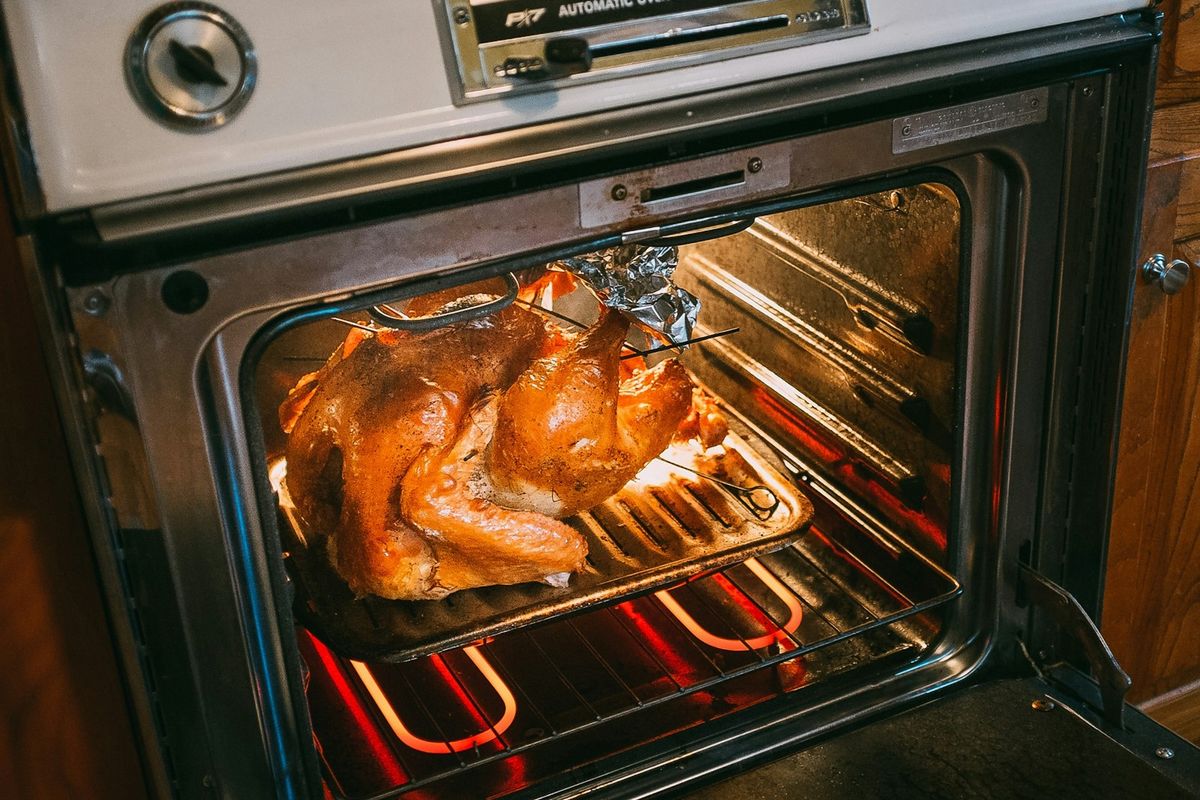
Every tray meal — the Jerk Chicken with Rice & Peas, the curry goat, the oxtail — goes into a preheated oven at 180°C (160°C fan) from frozen, loosely covered with foil, for 30 to 35 minutes. The foil keeps the rice from drying while the middle catches up; pull it off for the last five minutes if you want the edges of the jerk chicken to crisp back up. Before serving, check the centre: stir the rice and the stew through, look for steam rising from the middle (not just the edges), and probe for 75°C at the heart of the meat if you can. If the centre's not there yet, give it five more minutes — ovens vary far more than people think.
Method two: thaw first (the planner's route)
Defrost the meal overnight in the fridge — never on the worktop, where the outside sits warm for hours while the middle thaws, which is exactly how you brew trouble. A thawed meal reheats in around 20 minutes at the same temperature, with the same piping-hot rule. This route is slightly kinder to rice texture and useful when the oven's already juggling other things. Just remember the rules above: once thawed, use within 24 hours and never refreeze.
What about the microwave?
Honestly? It'll do in a pinch for the rice-based meals — decant into a microwave-safe dish, cover, heat on high, and stir halfway through, because microwaves heat unevenly and stirring is how you chase out the cold spots. Then check it's steaming hot throughout before it goes near a plate. But our patties are a different story entirely: a microwaved patty is a soggy patty, and after everything that pastry has been through to get flaky, it deserves better. Spicy Beef Patties bake from frozen at 180°C for 20 to 25 minutes until the pastry crisps and the filling is piping hot. Twenty-five minutes. The patty waited three months in your freezer; you can wait twenty-five minutes.
The mistakes we beg you not to make
- Judging by the edges. The rim of a tray heats long before the centre. Always check the middle.
- Thawing on the counter. Fridge overnight or cook from frozen — those are the options.
- Reheating twice. Heat it once, thoroughly, and enjoy it. Once a meal has been reheated, that's its final act.
- Letting it sit around after heating. Serve and eat a reheated meal straight away — same day, same sitting.
- Forgetting the resting stir. Give rice dishes a fork-through when they come out; it evens the heat and brings the coconut rice back to life.
Make it a proper dinner
A heat-at-home meal is a head start, not a ceiling. While the oven works, warm some plates, slice a lime, and put something cold in a glass — sorrel or ginger beer, chilled hard. If you want to understand what you're eating while you wait, our story of rice and peas done right explains why that coconut rice under your jerk chicken carries four hundred years of history. Twenty minutes of honest oven time, zero washing-up beyond a fork and a tray, and a dinner that started in our kitchen days ago finishes in yours tonight. That's the whole idea. Belly nice, indeed.
Found this useful? Pass it on.