
Rice and Peas Done Right (and What 'Peas' Actually Means)

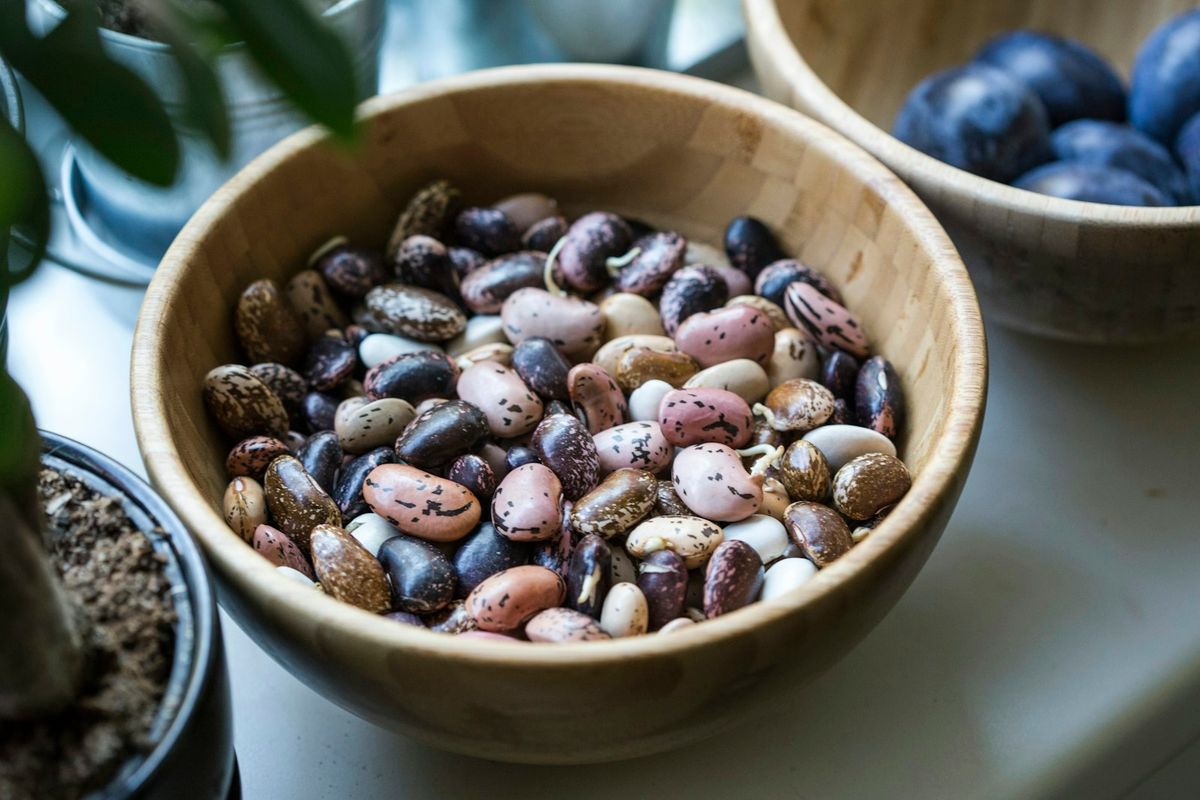
Let's settle the first question straight away, because it's the one every newcomer asks: no, there are no green garden peas in rice and peas. In the Caribbean, "peas" means what the British call beans — most often red kidney beans, and around Christmas, gungo peas (pigeon peas, fresh from the pod if you're lucky). Nobody knows quite why the word settled that way and nobody is changing it now. You'll adjust faster than you think.
Second question: why does it matter so much? Because rice and peas isn't a side dish in the way chips are a side dish. In Jamaica they call it the Sunday dinner's coat of arms — the thing that must be on the plate for the plate to count. It's the bed the jerk chicken lies on, the mild, coconutty counterweight to everything hot and smoky above it. Get it right and everything else on the plate makes sense. So here's how we do it in the Belly Nice kitchen, and the thinking behind every step.
A dish with deep roots
Rice cooked with beans and coconut didn't start in Jamaica — it's part of a family of rice-and-bean dishes that stretches across West Africa and the whole African diaspora, carried and kept alive through the Atlantic slave trade. You'll find its cousins everywhere the diaspora reached: Ghana's waakye, Nigeria's rice and beans, Cuba's moros y cristianos, and around the Caribbean a dozen variations — Bahamian peas and rice with pigeon peas, Trinidadian pelau cooked with brown sugar. Jamaica's version, rich with coconut milk and perfumed with thyme and pimento, is one branch of a very old and very wide tree. When you cook it, you're keeping something alive. No pressure — but also, some pressure. Do it properly.
The method, start to finish
1. Start with the peas
Soak a cup of dried red kidney beans overnight in plenty of cold water. Next day, drain them, cover with fresh water and boil them hard for ten minutes, then simmer until just tender — usually 45 minutes to an hour. That hard boil matters: it's what breaks down the natural toxin in raw kidney beans, so don't skip it. (Using tinned beans on a weeknight? No shame whatsoever — they're already cooked. Half the households in Jamaica do the same. Just don't tell my mother I said so.)
2. Build the pot
To the beans and about 400ml of their cooking liquid, add a tin of coconut milk or a good chunk of creamed coconut, two crushed cloves of garlic, two whole scallions bashed with the flat of your knife, a generous few sprigs of thyme, six or so pimento (allspice) berries, a teaspoon of salt and — the signature move — one whole scotch bonnet, unpierced. Whole and unburst, the pepper gives the pot its perfume and a gentle background warmth. Burst it and you've made a different dish for a braver table. Treat it like an egg you didn't mean to bring home.
3. Add the rice and leave it alone
Rinse two cups of long-grain rice until the water runs clear — unwashed rice cooks gluey, and rice and peas should be seasoned and separate, never sticky. Stir it in, top up so the liquid sits about 2cm above the rice, bring it to a boil, then drop the heat right down, lid on tight, for 20 to 25 minutes. And here is the rule that separates the elders from the beginners: do not stir it. Stirring releases starch and turns the pot to porridge. Trust the lid. When the liquid's gone, turn off the heat and let it steam, covered, for ten more minutes. Fluff with a fork, retrieve the scotch bonnet and the thyme stems, and present your work.
The mistakes that sink the pot
- Skipping the coconut — without it you've made rice with beans in, which is dinner, but it isn't rice and peas.
- Bursting the bonnet — fish it out whole at the end. If it splits mid-cook, accept your fate and warn your guests.
- Stirring mid-cook — the number one cause of mushy rice. Lid on, hands off.
- Under-seasoning the liquid — the rice can only taste of what it drinks. Season the pot before the rice goes in, and taste it: it should be pleasantly salty.
- Rushing the rest — those last ten minutes off the heat finish the grains. Serve straight away and the bottom will be wet.
The shortcut, without the shame
The hard part of rice and peas in Britain has never been the method — it's hunting down pimento berries, creamed coconut and a decent scotch bonnet on a wet Tuesday. That's exactly why we built our Rice & Peas Kit: every hard-to-find ingredient measured out, with the method on a card, so the argument about whose version is best can happen at your table instead of in the shop. And on the nights when even that's too much, our Jerk Chicken with Rice & Peas comes out of our kitchen with the rice already perfect, because we stood over the pot so you don't have to.
Once the rice is settled, get the main event right too — our guide to using jerk seasoning properly covers the marinade times and the smoke. Rice and peas, jerk chicken, something cold in a glass: that's not just dinner. That's Sunday, done right, wherever you are in the world.
Found this useful? Pass it on.